
 MIENSK · 960
Design principle 01
Provenance before authority.
Language and cultural claims should show where they came from, what remains uncertain, and who has the right to correct, annotate, or remove them.

I build tools to help people find, preserve, and understand Belarusian culture across borders. Music is the starting point. The research asks how AI could support language learning while keeping sources visible and cultural judgment with people.
Try the tools ↓One research program, two workspaces: an audio toolkit and a directory of cultural resources. You can explore both without an account. The methods and evidence behind them are further down this page.
Describe an artist, style, period, or format. Explore external catalog records with sources, then examine your own local collection separately. Missing language or mood evidence stays visible.
Describe the music you want ↗ ARCHIVE PASSPORTSelect a file, add its context, and create a checksum passport. Your audio stays on your device. No upload or account is needed.
Create a passport ↗ RESTORATION LABTry the synthetic audio demo, adjust a listening copy, and hear A/B. Preserve the original and export the processing log.
Open the audio lab ↗ CULTURE DIRECTORYBrowse podcasts, language resources, archives, and MAPA. This is a source directory, separate from the audio collection.
Browse cultural resources ↗ MAPACompare seven dated map layers, read the names of states, and check a city. A 28-stage chronology explains transitions without inventing missing boundaries.
Explore the historical map ↗The public artifact contains the exact 36-prompt Belarusian review bank, eight-dimension codebook, binary error flags, reliability procedure, analysis plan, ethics boundary, schedule, and version history.
Current review gate: the prompt bank remains a review draft. A second fluent Belarusian speaker should review naturalness, ambiguity, and neutrality before the instrument is frozen and any scored collection begins. No system responses have been collected for the scored audit and no findings are claimed.
The working question is intentionally bounded: how can a culturally grounded, community-accountable AI system support heritage-language learning and participation among geographically dispersed adults without replacing teachers, artists, or human cultural authority?
Language and cultural claims should show where they came from, what remains uncertain, and who has the right to correct, annotate, or remove them.
Regional variation, political disagreement, queer experience, migration, and generational difference are part of the knowledge — not noise to be averaged away.
Conversation practice can be paired with creative projects: documenting a story, annotating a song, preparing a release, or contributing context under revocable consent.
The first phase is a bounded non-human-subject audit of existing AI systems. It tests the evaluation instrument before any community recruitment and creates a concrete artifact for methodological critique.
Record wording, model, date, settings, and output without post-hoc editing.
Remove system identity before independent scoring and qualitative notes.
Calculate agreement and inspect disagreements instead of hiding them.
Document what changed after academic and community methodological review.
Research boundary: the workbook, prompt bank, codebook, and scoring template are prepared. Results will not be presented until responses are frozen, the prespecified reliability procedure is completed, and the analysis is reviewed for overclaiming.
These projects establish lived access, cultural practice, systems-building experience, and testable hypotheses. Scholarly methods and peer review will test them.
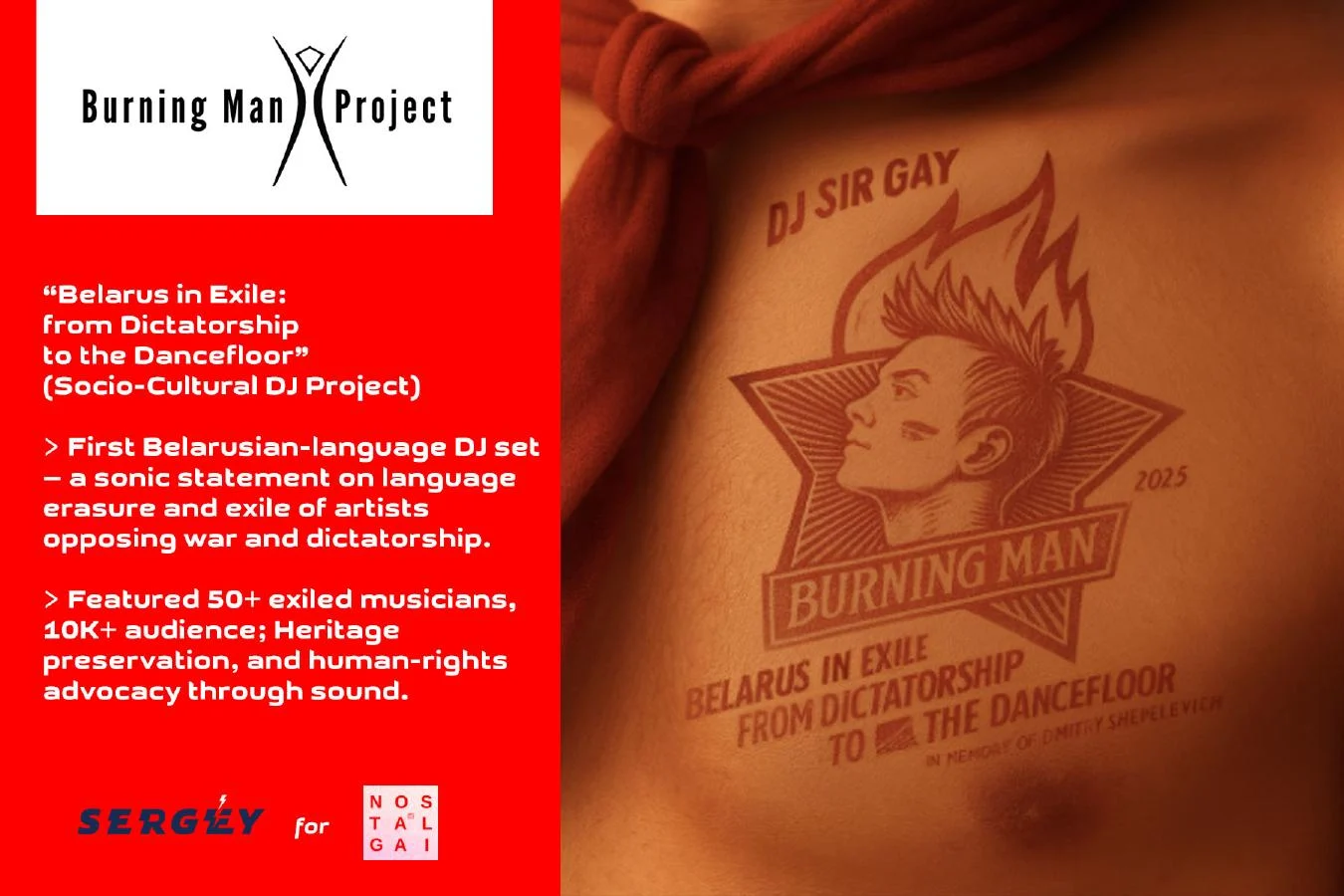
Archive · curation · public interventionAn approximately two-hour, 55-track cultural DJ set built after reviewing Belarusian television, recordings, remixes, performances, and artists across roughly three decades. The next step is a provenance-first dataset documenting sources, language, selection rules, gaps, and rights status.
Watch the public artifact ↗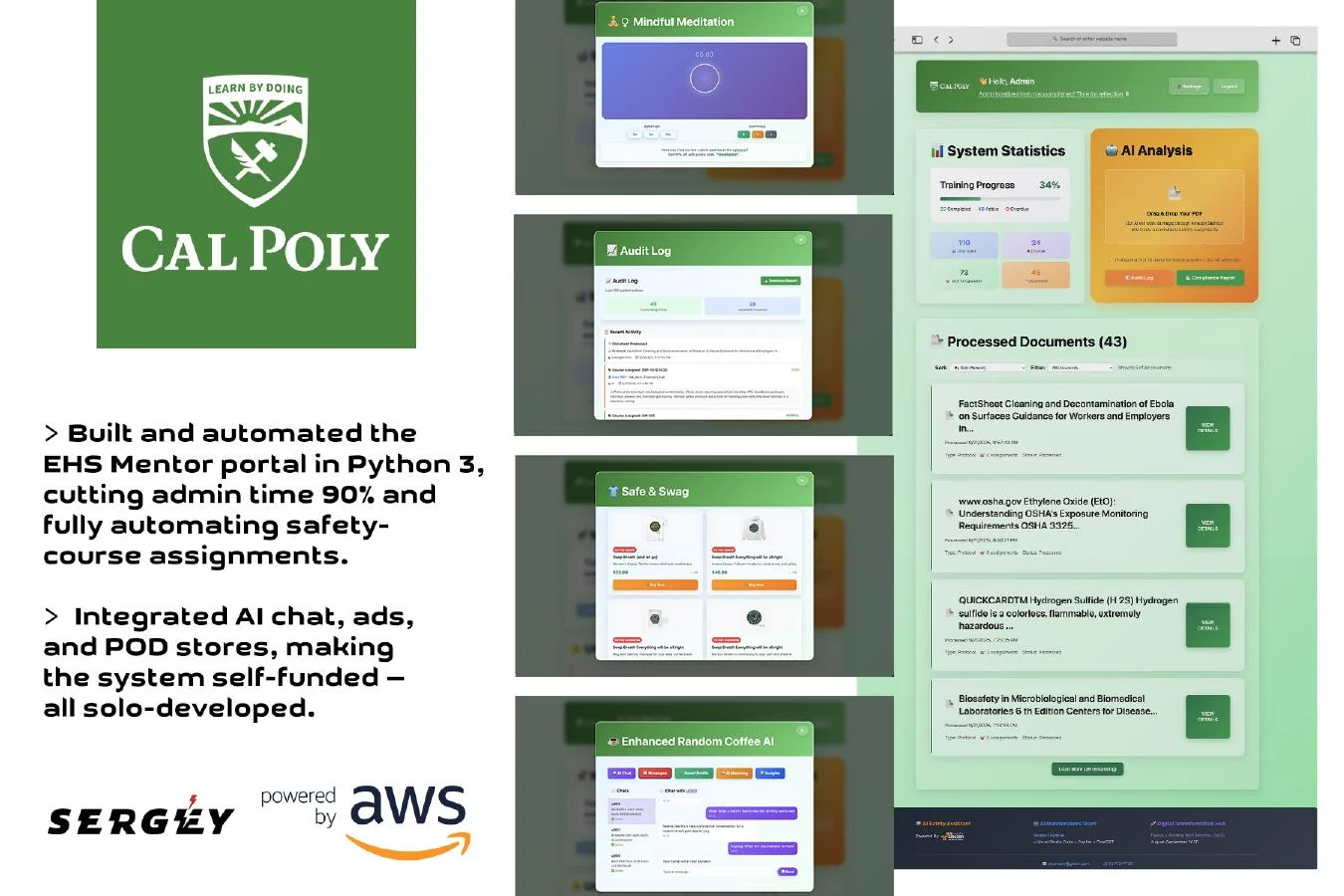 Applied AI · Python · workflow design
At the Cal Poly Digital Transformation Hub × AWS AI Summer Camp, Sergey independently designed and implemented EHS Mentor, a working Python/FastAPI prototype. It turns safety documents into role-based training assignments, question-answer support, dashboards, reporting states, and human-review workflows. Public demos establish the prototype; efficiency estimates remain targets, not audited outcomes.
Open the applied AI case →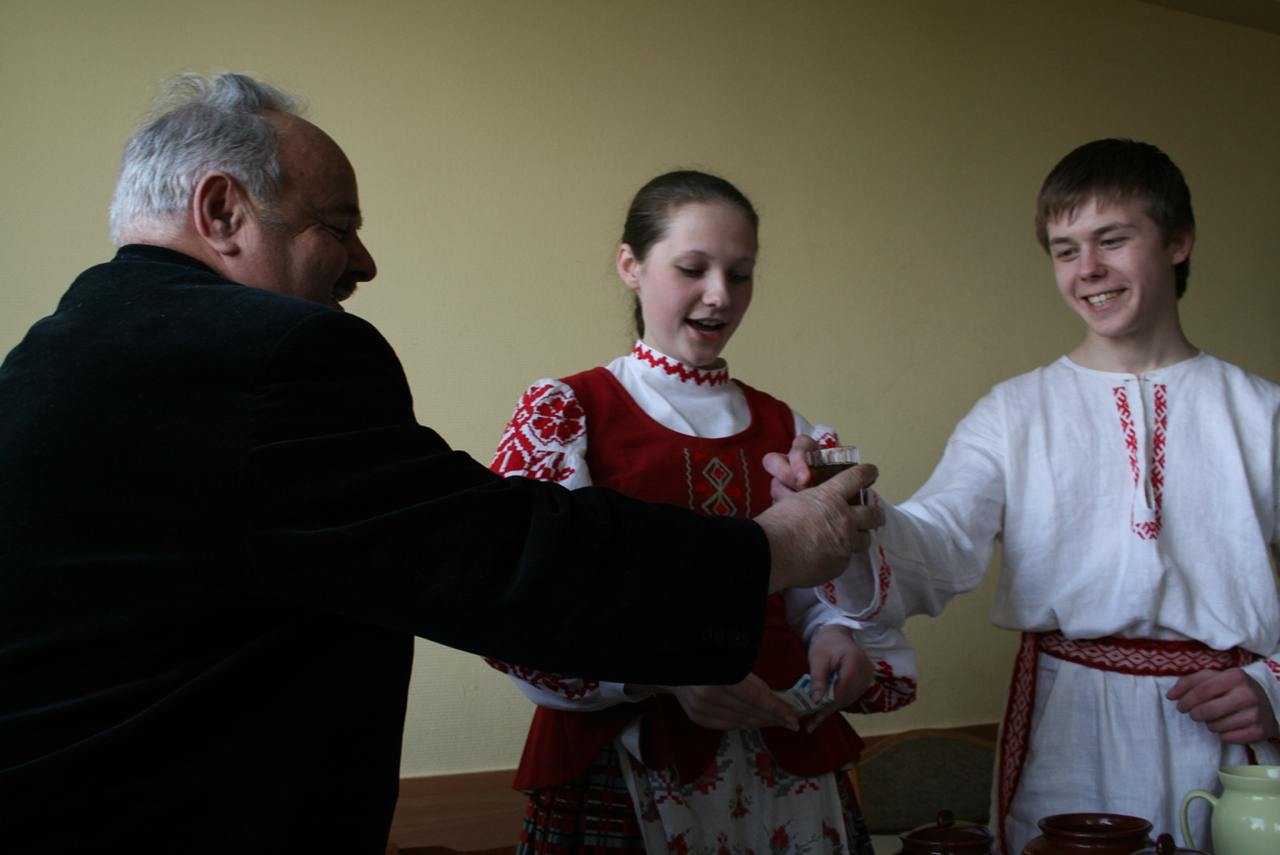 Formal study · ritual · pedagogy
Sergey holds a higher-education diploma in Directing, specializing in Rituals and Festivals, with the qualification Director, Teacher. His certified coursework spans Belarusian folklore, language, ritual, folk games, ensemble methods, pedagogy, and directing practice. This is formal cultural and pedagogical preparation—not a claim of prior academic research.
Staged ritual practice during Sergey's BSUCA training, Minsk, before 2010. Other participants and faculty are not identified here without independent confirmation.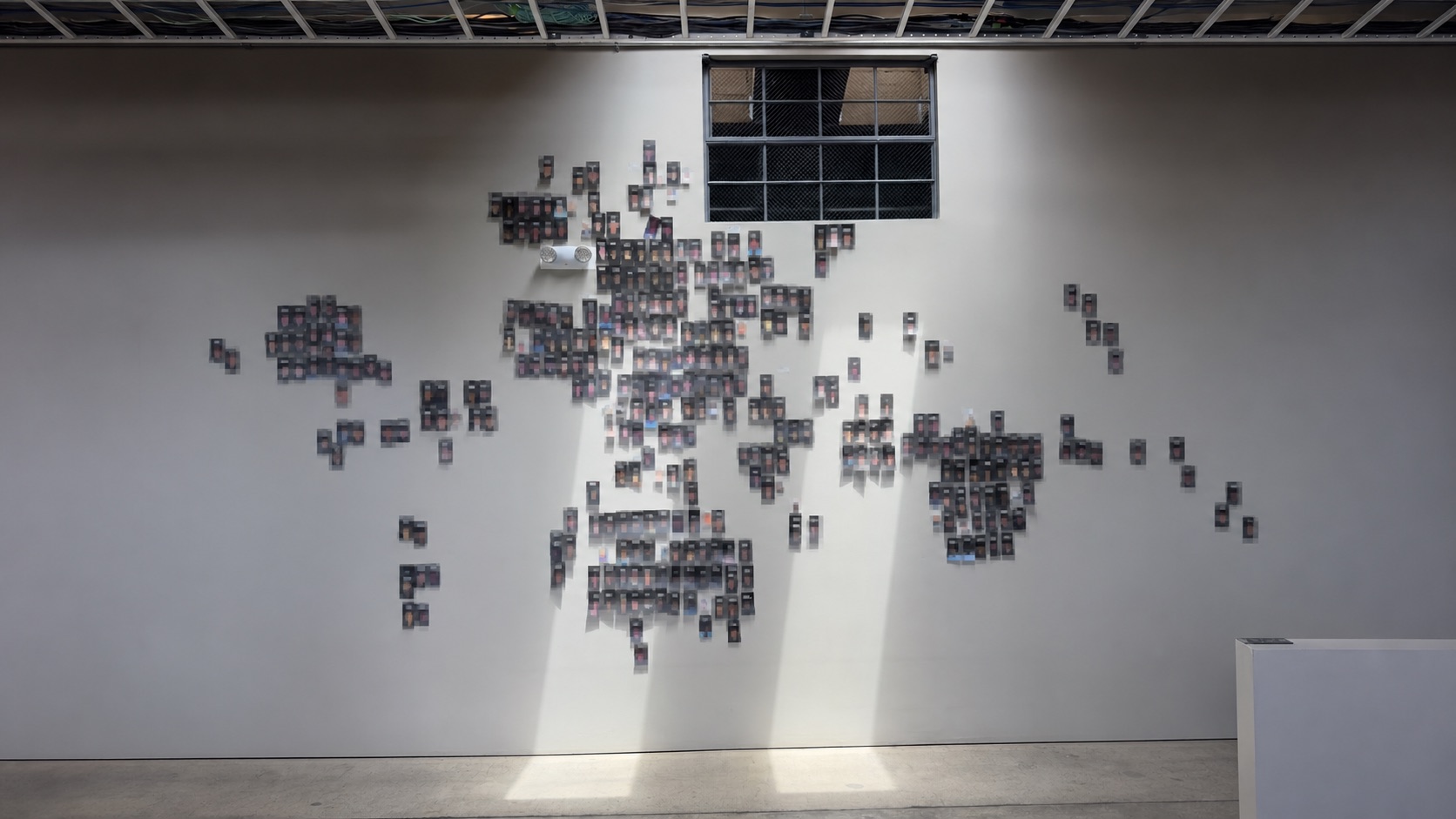 Multilingual AI · documented participation · May 2024
In Los Angeles, Sergey contributed Belarusian-language expertise to an international Ericsson-related AI study and was recorded in a specialized 78-camera booth. A contemporaneous email, the original project photograph, and private contract records establish the date, client, and participation. NDA boundaries remain: no product, dataset, model, or internal method is disclosed.
Privacy-protected editorial rendering based on Sergey’s on-site documentary photograph. Participant faces and identifiers have been obscured. Learning-by-doing · artist infrastructure
An operating label for artists in migration, with releases, physical products, global delivery, and a planned AI-assisted producer that can scaffold the journey from concept to rights-aware release while keeping authorship with the artist.
Review the operating case → Language · songwriting · moving image
Original songs, an EP connected to the 2020 democratic movement, and music videos carried Belarusian language and identity into public media beyond Belarus. They provide artifacts for analysis, not proof of national representativeness.
Open selected music and videos ↗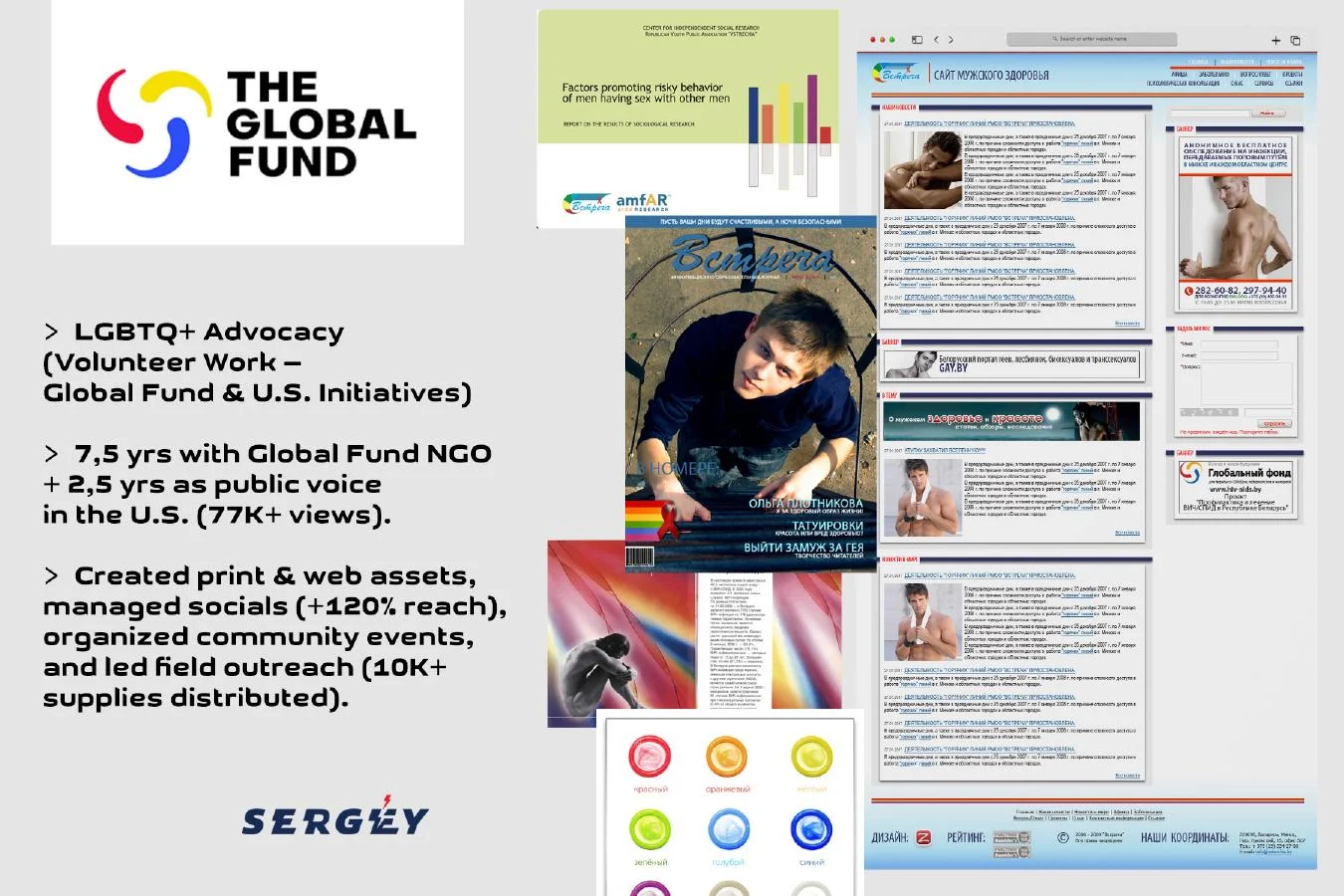 Community work · positionality
Long-term community media, events, and outreach provide context for questions of trust, stigma, safety, and representation. They also make conservative consent and data-minimization requirements non-negotiable.
Watch a Belarusian community interview ↗ Commercial localization · public language
During Sergey's salaried agency employment, the McDonald’s Duda activation brought Belarusian cultural material into a national digital campaign. Customers could play Belarusian bagpipe music through the campaign app. The public record and employment history establish context; exact creative attribution awaits a verifying project artifact or colleague record.
Review independent campaign coverage ↗ Short-form video · cultural circulation
A spontaneous Belarusian-language performance filmed on a karaoke e-trike in Los Angeles reached about 230,000 views and circulated through major independent Belarusian media. It shows how a short-form artifact can return language and cultural recognition to a dispersed public. Reach is observable; attitude change or language learning is not claimed.
Read the independent account ↗ Institutions · diaspora · civic continuity
Creative-worker certification, professional and diaspora memberships, Belarusian-language interviews, public opposition to dictatorship, and support for artists in migration form a record of cultural continuity. Earlier BELAU youth-camp volunteering adds community education and service. This supports positionality—not a claim of formal research training.
Watch an ABA interview ↗Methods foundation, stated proportionally: Sergey's certified World Economy transcript records 462 academic hours of Higher Mathematics, 230 of Statistics, 98 of Econometrics and Economic-Mathematical Methods and Models, and 340 of Computer Information Technologies. His Cal Poly prototype establishes practical Python/FastAPI experience. These are foundations for doctoral training, not a claim of current mastery of advanced statistical research.
A strong founder–research fit is a starting point. This source desk lets a university, lab, or collaborator evaluate both the promise and the work still required.